Understand the spirit behind the tasting
Dominican Rum in Santo Domingo: A Beginner’s Guide
Understand Dominican rum, ageing, blending and mamajuana, then choose a Santo Domingo tasting with clearer expectations about the programme and setting.
Start with sugarcane, fermentation and distillation
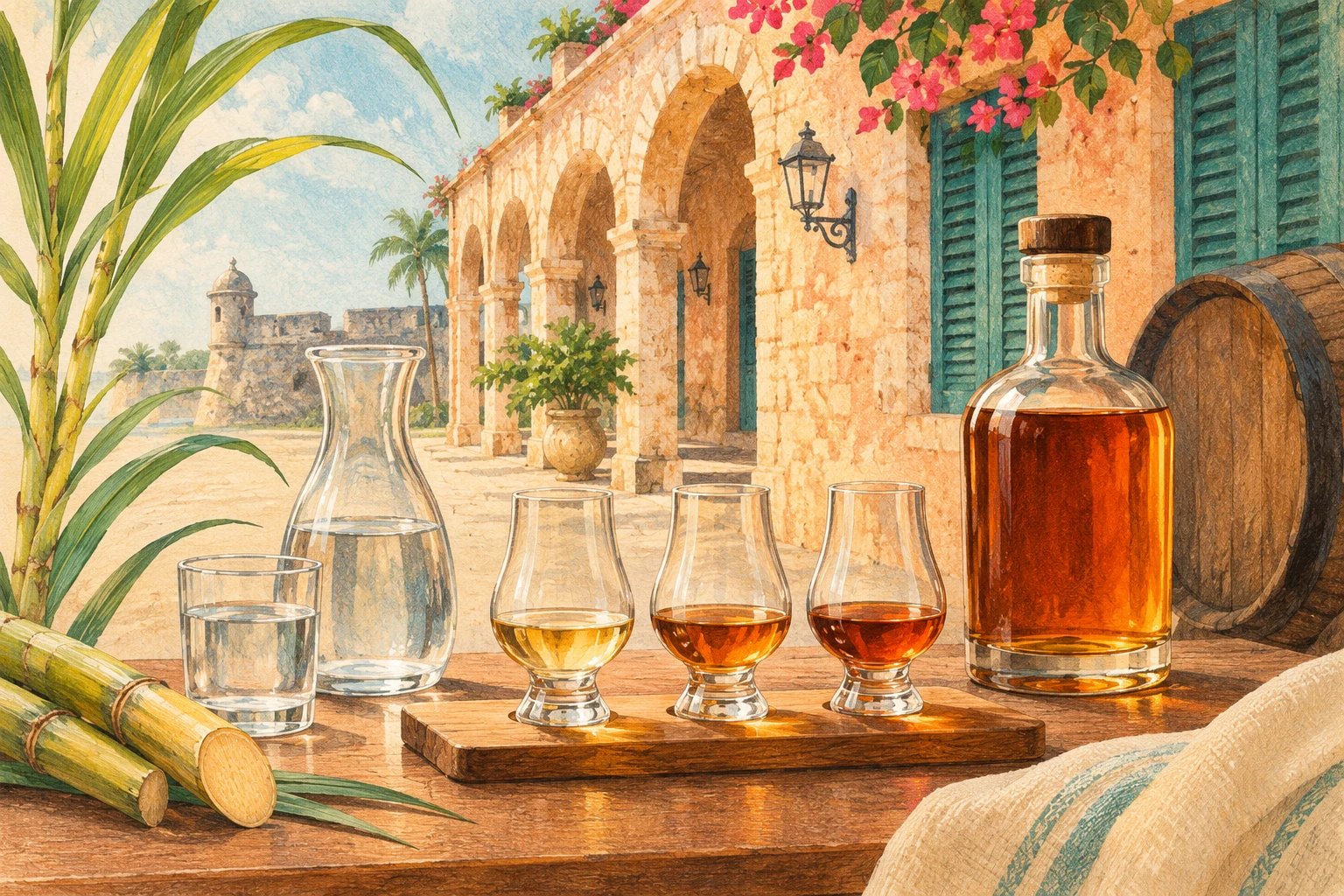
Rum begins with sugarcane-derived material, such as molasses or cane juice. Fermentation produces an alcoholic liquid; distillation separates and concentrates components before further production choices. These are different stages, not simply sugarcane left in a barrel. Dominican rum is not one uniform recipe. Barceló, for example, describes using sugarcane juice, while producers make different choices about distillation, maturation and blending. Names such as Barceló and Brugal can help you recognise Dominican producers, but their appearance here does not promise particular bottles on a tour. The Dominican food guide places rum within a broader culinary visit.
Understand what barrels and blending contribute
Maturation in wood can change aroma, flavour and colour; the wood, its previous use, the time and storage conditions all matter. Blending brings selected rums together to achieve a chosen profile, rather than automatically indicating lower quality. A producer may also use a later period in another cask. Ask which process applies to the bottle in front of you. A darker colour is not a reliable measure of age or quality, and a longer maturation is not automatically the taste you will prefer. The useful comparison is the actual production explanation, not a ranking by colour.
Read the label without inventing its meaning
Words such as añejo, reserva and descriptions of cask finishing are starting points for questions, not interchangeable guarantees. If a number appears, ask whether it is an explicit age statement, a name or a reference to another part of the product’s story. Do not apply one producer’s explanation to every bottle. Check the named producer, stated origin, alcohol strength and product description; country identity does not explain every production stage. For buying rather than tasting, use the souvenir guide for provenance, receipts, packaging and the journey home.
Distinguish rum from mamajuana
Mamajuana is a Dominican infused alcoholic drink, commonly prepared with botanicals and a mixture that can include rum, wine and honey. Recipes vary. It is not simply another ageing category of rum, and a bottle containing dry botanical material is not the same purchase as a ready-to-drink product. Ask what is actually in the sample, including ingredients you avoid, and treat it as a drink rather than a remedy. A cultural story does not establish a health benefit. If both rum and mamajuana appear in a programme, they are different subjects to discuss rather than equivalent samples.
Use a tasting to compare, not to finish a checklist
A guided tasting is useful when samples are identified and the host explains what differs: raw material, casks, maturation, blending or presentation. Notice the aromas and flavours you perceive, perhaps wood, fruit or spice, without needing to repeat someone else’s description. Perceived sweetness alone does not establish the recipe. Ask questions, leave samples unfinished or decline them; participation is not a requirement to consume every pour. For another way to explore Dominican products, the cacao and chocolate guide explains an educational tasting subject that does not centre on alcohol.
Choose the actual format and confirm your group’s needs
A cocktail stop combines ingredients in a prepared drink; a comparative tasting explores selected spirits; a production visit involves a specifically confirmed facility. A venue in the Colonial Zone is not automatically where its rum is distilled. The Food and Rum Experience lists rum tasting within a broader food programme, not a guaranteed distillery tour or an evening dinner reservation. Its published rum tasting is for adults aged 18 and over. Confirm current samples, food, duration, guide language, group size and any non-alcoholic arrangements. A companion who does not drink may still value the explanation, but the operator must confirm participation and pricing.
Give the experience a clear place in your city day
Choose one programme that fits the sightseeing and meals you actually have time for. Confirm the meeting address, start, walking component and return, especially if you are based outside the Colonial Zone. The transport guide helps plan the journey; arrange the return rather than driving after a tasting. Keep the experience price, optional drinks and bottle purchases distinct. A tasting does not oblige you to buy, and a purchase is not automatically included. Understanding a few products and their differences can add more to the visit than collecting a long list of pours.
Questions about this itinerary
Are rum and mamajuana the same?
No. Rum is a distilled sugarcane-based spirit; mamajuana is an infused drink with a variable recipe that may include rum, wine, honey and botanicals.
Does a larger number mean older or better rum?
Not automatically. Ask what the number means for that product and distinguish an age statement from a product name. Age alone does not establish your preferred flavour.
Is a rum tasting the same as a cocktail stop?
No. A tasting compares identified products, while a cocktail combines ingredients. Confirm what the programme actually serves and explains.
Does a city tasting include a distillery?
Not unless explicitly included. Confirm the facility, address and production stages shown; a bar or tasting room is not automatically a distillery.
Can someone who does not drink join?
Ask the operator about explanation-only participation, alternatives and price. Do not assume substitutions or a discount; anyone may decline a sample.
Can I buy bottles afterward?
Ask whether purchases are available and separate from the experience price. Check the seller, receipt and current transport and destination requirements before buying.
Keep planning
Experiences for this itinerary
Explore rum with more context
Compare cultural experiences and confirm the tasting programme, food, language and arrangements for everyone in your group.
Compare Santo Domingo experiences