Discover the craft behind the flavour
Dominican Cacao and Chocolate in Santo Domingo: A Visitor’s Guide
Understand Dominican cacao from pod to chocolate, learn how to approach a tasting and distinguish a Santo Domingo workshop from a plantation visit.
Cacao, cocoa and chocolate: know what you are tasting
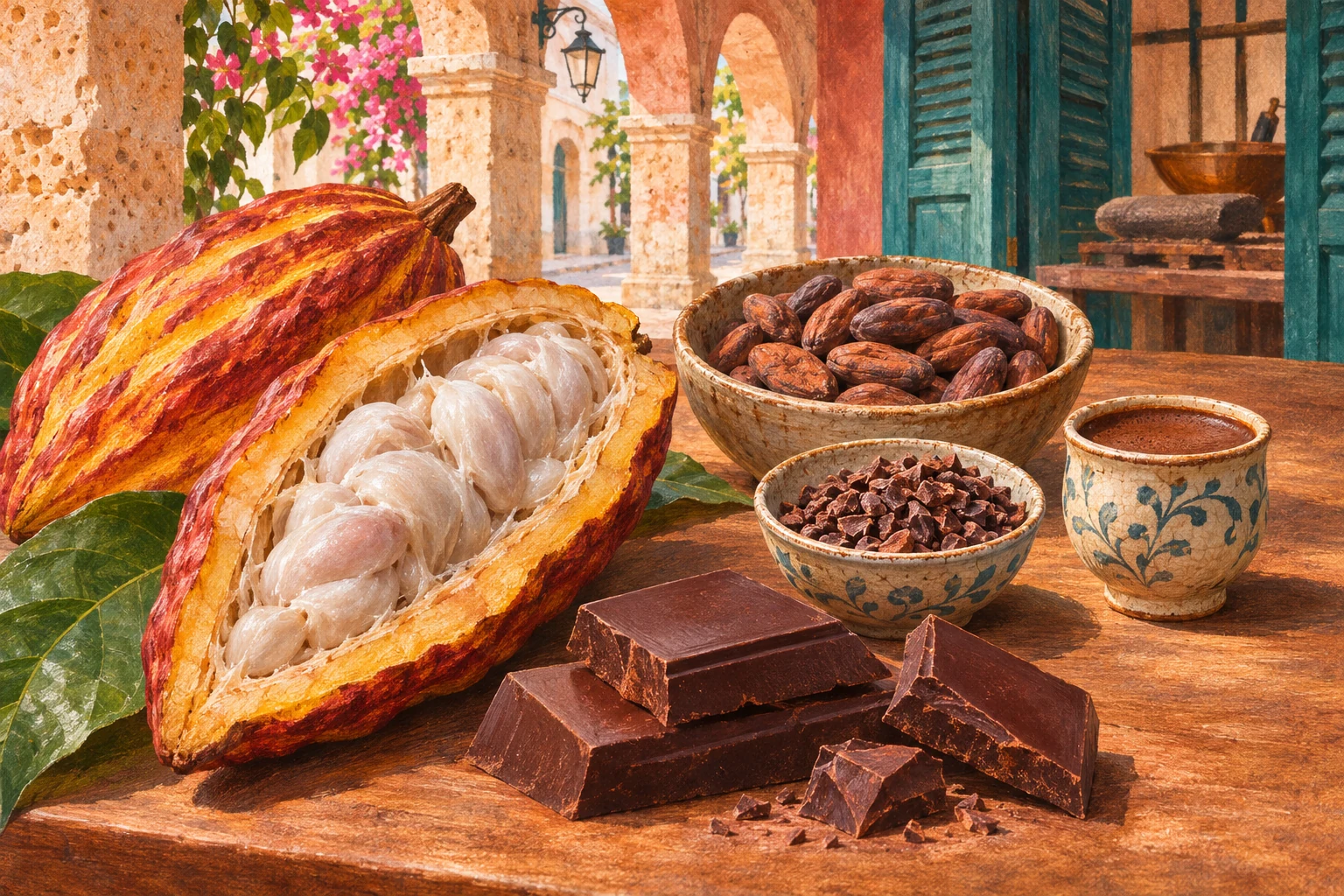
Cacao is the plant and the starting material, not just a finished sweet. The pod contains seeds surrounded by pale pulp; processed beans, nibs, cocoa powder and chocolate are different products. Nibs are pieces of the shelled bean, while chocolate combines cacao ingredients with a particular recipe. A prepared cacao drink can contain sugar, milk or other additions. English labels use cacao and cocoa in varying ways: neither word alone proves that a product is raw, unsweetened or suitable for a dietary requirement. The Dominican food guide places these tastes within a wider visit.
Follow the journey from pod to chocolate
After harvest, pods are opened and the extracted seeds with their pulp can undergo fermentation. Fermentation develops flavour precursors; drying reduces moisture for storage and further processing. Roasting contributes another stage of flavour development. Shell removal leaves nibs, which can be ground into cacao mass, also called cocoa liquor: the name does not mean it contains alcoholic liquor. Chocolate making then involves a recipe and processes such as refining, conching and tempering. These are different operations, not one quick transformation. A tasting counter may explain stages completed elsewhere rather than perform the entire chain while you watch.
Taste for differences, not a winning percentage
Start with a small piece and notice aroma, texture, sweetness, bitterness and any fruit-like or roasted notes you perceive. There is no need to find the same descriptions as another visitor. Compare products with clear ingredient information and ask what changed between samples. The stated cacao percentage describes cacao-derived content, not a complete quality score, farm identity or promise of flavour. Two bars with the same percentage can taste different. Dark colour does not establish that chocolate is milk-free, and a Dominican label does not identify a particular farm or certify its practices.
Choose a tasting, demonstration or hands-on workshop
A tasting focuses on samples and explanation; a demonstration lets you observe; a workshop involves a defined activity you carry out. Those labels do not guarantee the same duration, equipment or take-home product. Ask what you will actually do: compare finished chocolate, grind ingredients, mould a bar or simply watch a process. Confirm group size, guide language, included samples, any separate workshop fee and what can be taken away. Compare the Cacao and Cigar Experience with the Food and Rum Experience: the first combines crafts, while the second places cacao within a broader culinary programme. Neither should be assumed to be a chocolate-only workshop. See what to look for at a Dominican cigar rolling demonstration.
Separate a city encounter from a plantation visit
Dominican cacao-growing provinces include Duarte and Hato Mayor, outside the capital. Ask which region supplied the beans in your sample: a chocolatier’s city address is not the same as the farm’s location.
A chocolatier or tasting room in the Colonial Zone can introduce cacao without being a farm. A pod on display, a film or a production explanation does not mean cacao is cultivated at that address. Seeing trees, harvesting or farm fermentation requires a separately confirmed growing-site visit; do not infer one from a city booking. Ask where the beans were grown, which processing stages happen on site and which parts of the programme are explanation rather than live production. A claim of Dominican origin is more useful when the producer can explain what it refers to.
Choose a setting that works for your group
Cacao offers a cultural interest that need not centre on alcohol or tobacco, but a combined tour may include them. In the published cacao-and-cigar experience smoking is optional; that does not establish a smoke-free setting, a chocolate-only alternative or suitability for every child. Use the family guide to fit the activity to attention spans and breaks, then confirm ages, participation and the actual venue. For ingredients you must avoid, ask about every sample and shared preparation. A dark bar, a cacao drink or a requested change is not confirmation that a requirement can be met.
Give cacao a clear place in your city day
Choose one focused activity near the sightseeing you already planned, with time to enjoy it rather than rushing between tastings. Confirm the address, start time, walking component and whether food provision is a sample or a meal. Keep purchases separate from the experience price. If you want to buy chocolate afterward, the souvenir guide covers labels, packaging, heat and the journey home. A lesson or sample does not oblige you to buy, and an attractive workshop does not authenticate every product offered nearby.
Questions about this itinerary
Does a Santo Domingo chocolate experience include a plantation?
Not automatically. A city tasting or workshop and a growing-site visit are different activities. Confirm the actual address and programme.
Is higher-percentage chocolate always better?
No. Percentage does not describe the whole recipe, processing, flavour or origin. Compare products and choose what you enjoy.
Will I make my own chocolate?
Only if a hands-on activity is explicitly included. Ask what you make, which steps you perform and whether a take-home item is provided.
Must I smoke or drink alcohol?
Cacao itself does not require either. Combined programmes may include tobacco or alcohol; confirm the format, setting and alternatives. Optional smoking does not mean a smoke-free venue.
Is dark chocolate automatically milk-free?
No. Check the ingredients and ask about shared preparation. Colour and cacao percentage are not assurances for dietary requirements.
Keep planning
Experiences for this itinerary
Explore cacao with clearer expectations
Compare Santo Domingo cultural experiences and confirm the tasting, workshop format, language and setting that suit your group.
Compare Santo Domingo experiences