Discover the city through its food
What to Eat in Santo Domingo: Dominican Dishes and Practical Tips
Get to know mangú, la bandera, sancocho and other Dominican foods before ordering in Santo Domingo. Compare meal styles, plantain dishes, snacks and tastings, with practical questions for your visit.
Start with a few dishes, not a tasting checklist
Food is part of understanding Santo Domingo, not a challenge to finish in one sitting. Choose a few things across the meals you actually have: a breakfast, a proper lunch and a smaller taste later may tell you more than several heavy dishes ordered together. Keep familiar foods available if members of your group want different levels of experimentation.
Think in terms of a meal and its accompaniments. A plate of meat may come with sides or require ordering them separately; a tasting portion is not necessarily lunch. Ask what is included and whether a portion is intended for one person or sharing. The menu, rather than a photograph from another restaurant, determines your order.
Breakfast and the different ways to eat plantain
Mangú is a mash of boiled green plantains, often served with onions. Breakfast versions may include eggs, fried cheese and Dominican salami; confirm the accompaniments rather than assuming every plate is the same. If you want to try the plantain itself, ask how the dish is prepared and what can be ordered separately.
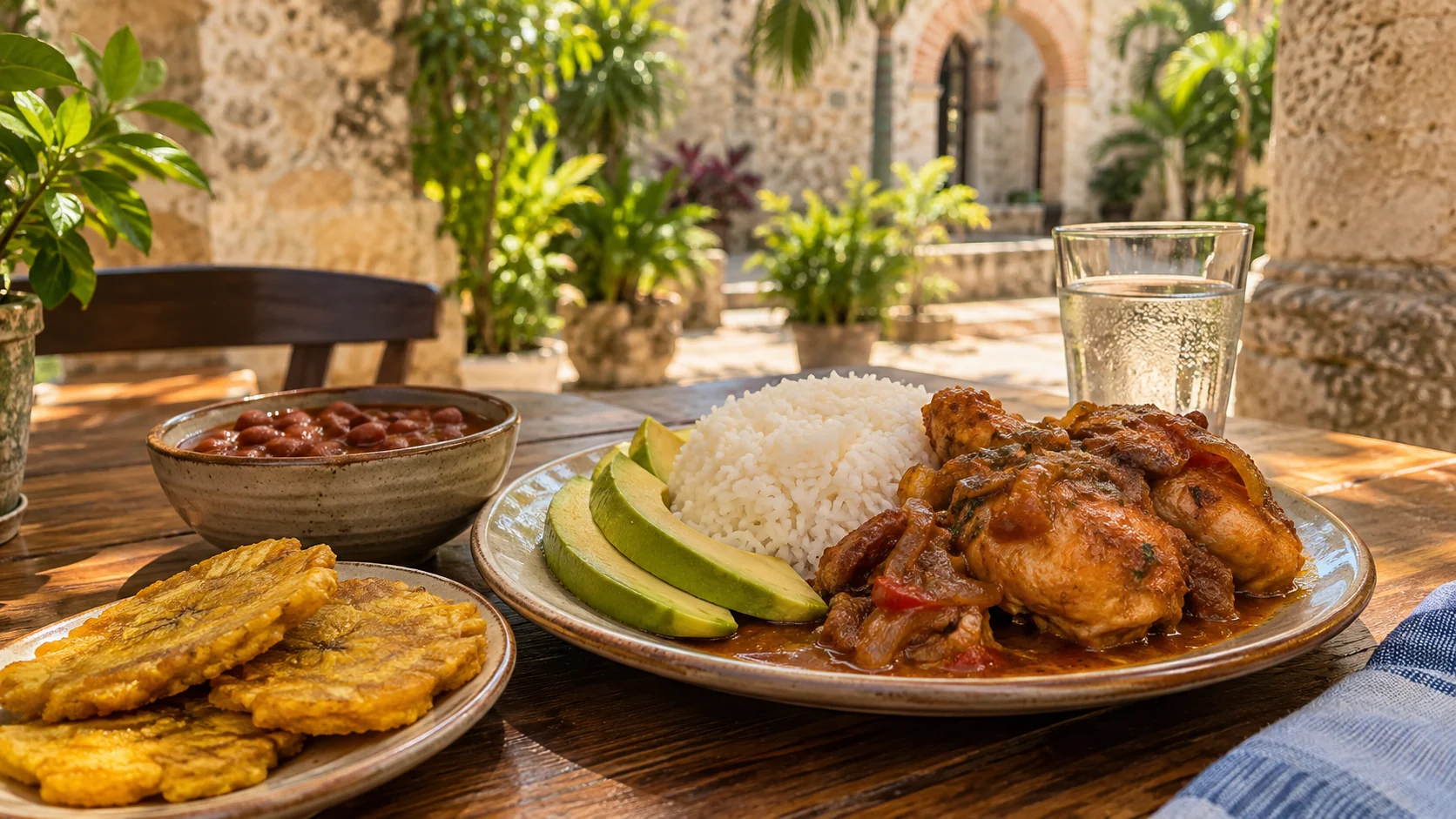
Tostones are flattened, twice-fried green plantain rounds with a savory character. Maduros use ripe plantain and are sweeter. Mofongo is another preparation, typically combining fried plantain with garlic and often pork, with variations and different toppings. Knowing these names helps you choose a side or a more substantial dish without ordering several versions unintentionally.
Understand a Dominican lunch
La bandera is a familiar Dominican lunch built around rice, beans and meat, often a stew, with accompaniments that vary. It is useful for a visitor because you can see the parts of the meal rather than guess from a single unfamiliar name. Ask which meat is being served and whether beans and other sides are included.
Sancocho is a hearty stew with meats and starchy vegetables or tubers; recipes differ. Do not assume every version contains the same meats or is available every day. Ask about the preparation, portion and accompaniments. If you have already ordered a substantial plate, decide whether another full dish makes sense or whether you would rather try it at the next meal.
Snacks and smaller bites
An empanada can be a smaller stop between visits, but its filling and size matter. Ask what is inside: the name alone does not establish whether it contains meat, cheese or vegetables. The same approach helps with other counter snacks. Look at what is being offered, ask the price and choose the amount you actually want.
Chicharrón is fried pork, often enjoyed for its crisp texture. It is not a vegetarian snack, and a small-looking serving can be rich. Sharing can let a group try something without replacing the next meal, if the vendor or restaurant offers a suitable portion. Keep a distinction between a snack break and sitting down for lunch.
Cacao, coffee and something to drink
You can explore food culture without making alcohol the focus. A coffee break or a chocolate tasting offers a different pace from a full meal. Ask whether a cacao product is a drink, nibs or chocolate, and check sweetness, milk and other additions. A product described as Dominican does not by itself explain its ingredients.
The Cacao and Cigar Experience combines chocolate with a broader craft programme that also includes tobacco. Read that format before choosing it just for dessert. Smoking is optional in the published experience, but confirm the setting and any age restrictions for your group. For rum or other drinks, distinguish a guided tasting from a normal meal and ask about non-alcoholic alternatives.
Choose a meal, a comedor or a guided experience
A comedor generally offers straightforward prepared meals; a sit-down restaurant may have a broader menu and a different pace. Neither label guarantees a particular price, menu or dietary option. Ask what is available that day and whether service, taxes, drinks and sides are included in the amount you are comparing.
Use the Colonial Zone guide to place a meal within your visit to the historic district. Compare the Dominican Food and Rum Experience if you want guided context and several tastes within one programme. Check its actual stops, timing, inclusions and meal provision. A food tour is an organized experience, not simply a restaurant reservation or a promise that every named dish will be served on your date.
Ask about ingredients and dietary needs
A dish name is a starting point for a conversation. If you avoid meat, ask about stock, sauces, beans, added pork and toppings as well as the main ingredient. If you avoid dairy or another ingredient, ask how the dish and its accompaniments are prepared. Requesting a change does not establish that a kitchen can provide it.
For allergies, explain the specific requirement before ordering or booking and ask about ingredients, shared equipment and preparation. Do not treat vegetarian, plain or chocolate as an assurance of suitability. If the venue cannot confirm what you need, choose an option it can explain rather than guessing. Keep food preferences and essential restrictions clear when communicating with a guide.
Fit food into your Santo Domingo day
The one-day itinerary leaves room for a proper lunch rather than continuous sightseeing. Pick the meal around your route and appetite; it does not need to become another distant stop. The evening guide helps separate choosing dinner from arranging music, dancing and the return to your accommodation.
For children, use the family travel guide to plan breaks and meals around their routine. Let the group try new dishes at a comfortable pace, confirm the order before it goes to the kitchen and leave time to enjoy it. Understanding a handful of foods makes the whole stay easier than trying to sample everything on the first day.
Questions about this itinerary
What should I try first in Santo Domingo?
Choose according to the meal: mangú is a breakfast starting point, la bandera introduces a Dominican lunch, and a smaller snack or cacao tasting can fit another break. You do not need all of them in one day.
Are mangú, tostones and maduros the same?
No. Mangú is mashed boiled green plantain; tostones are flattened and twice-fried green plantain; maduros use ripe plantain and have a sweeter taste.
Can vegetarians find something to eat?
Ask about available dishes and their preparation, including stock, sauces, beans and toppings. A vegetable or plantain base does not guarantee a meat-free preparation. Confirm with the kitchen.
Is a food tour the same as booking lunch?
No. A tour combines a programme and guiding with specified tastings or meals. Check timing, portions, included food and drinks, and dietary arrangements before comparing it with an independent lunch.
Do I have to drink rum to enjoy a food experience?
Food culture also includes dishes, cacao, coffee and non-alcoholic drinks. For an organized experience, confirm alternatives and the programme rather than assuming the rum element can always be changed.
Keep planning
Experiences for this itinerary
Explore Santo Domingo through its food
Compare the culinary experiences and confirm their programme, inclusions and suitability for your group.
Explore Santo Domingo experiences