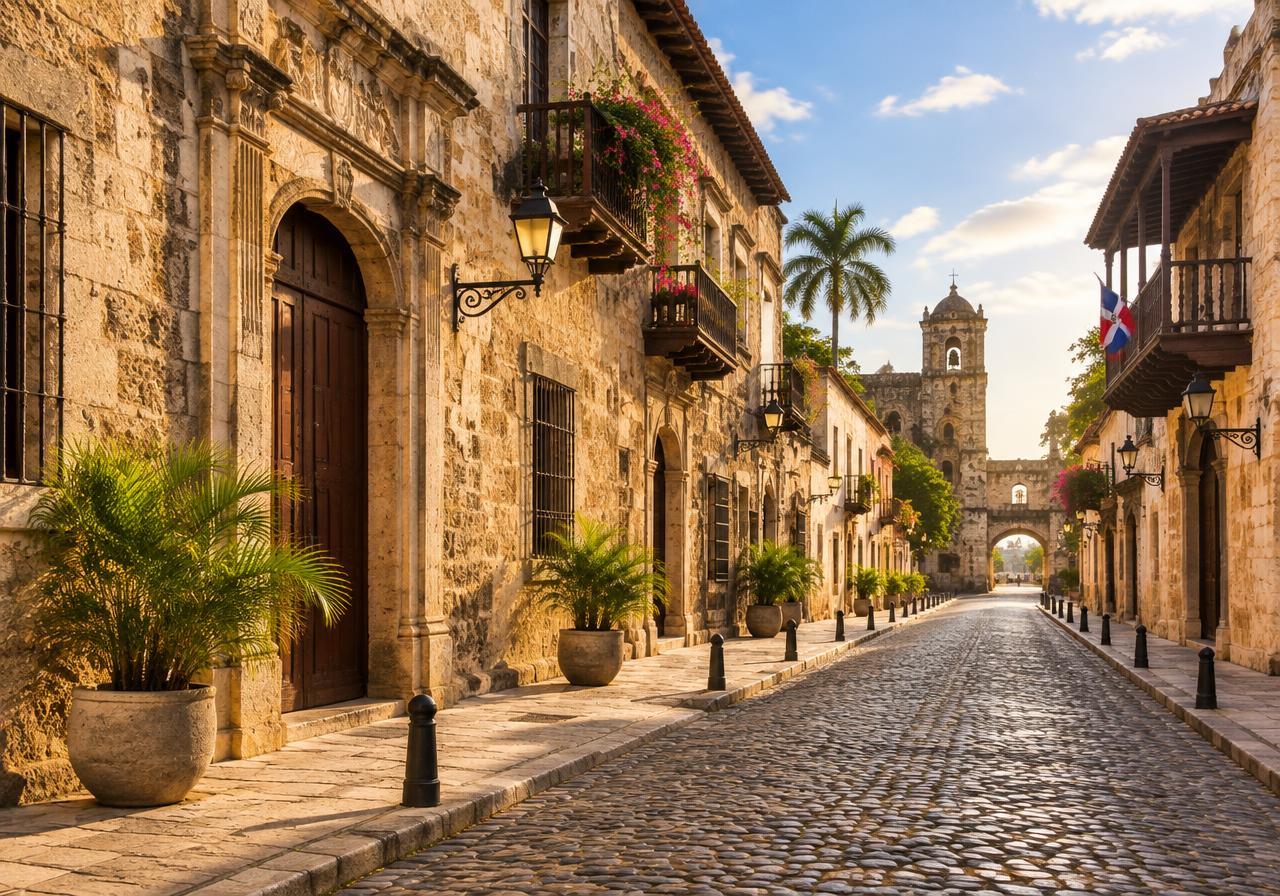
What to see
The Catedral Primada de América (1514–1541), the Alcázar de Colón built for Diego Columbus, the Fortaleza Ozama — the oldest military building in the Americas — and Calle Las Damas, the first paved street of the New World. Add the Panteón Nacional, the Ruinas de San Francisco and Parque Colón.
When to go
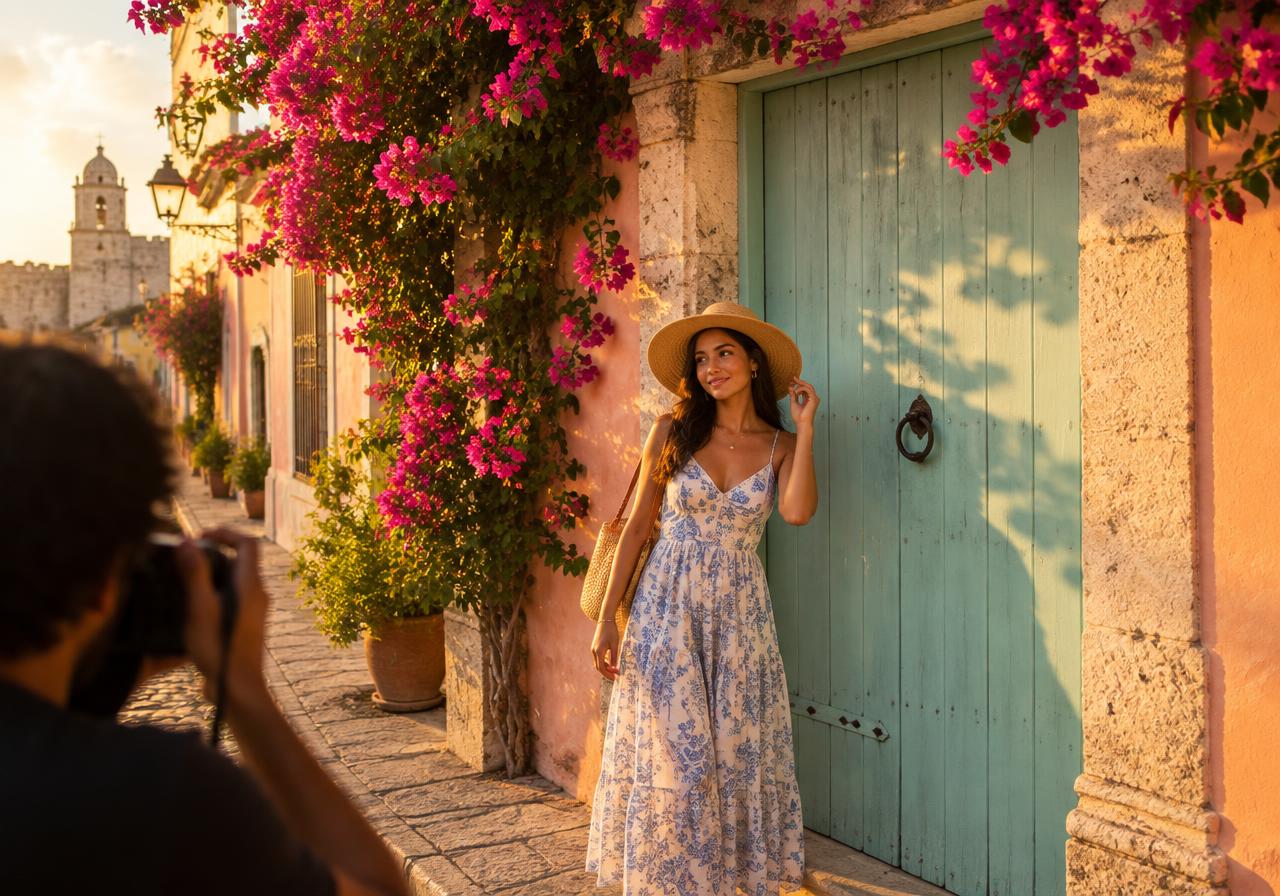
Early morning (8–11am) is cooler and quieter. Late afternoon brings golden light on Plaza de España, and Sunday evenings the ruins of San Francisco host free live son and merengue.
How to get there
The Colonial Zone sits on the west bank of the Ozama River, about 35 minutes from Las Américas Airport (SDQ). Most of it is best explored on foot.
A short history of the Ciudad Colonial
Bartholomew Columbus founded Santo Domingo in 1496 on the east bank of the Ozama; after a hurricane in 1502 governor Nicolás de Ovando rebuilt it on the west bank, on the grid you still walk today. From here Spain ran its first administration, court, university and cathedral in the Americas. In 1990 UNESCO listed the Colonial City as a World Heritage Site, recognising it as the first European-planned city of the New World.
Landmarks worth your time
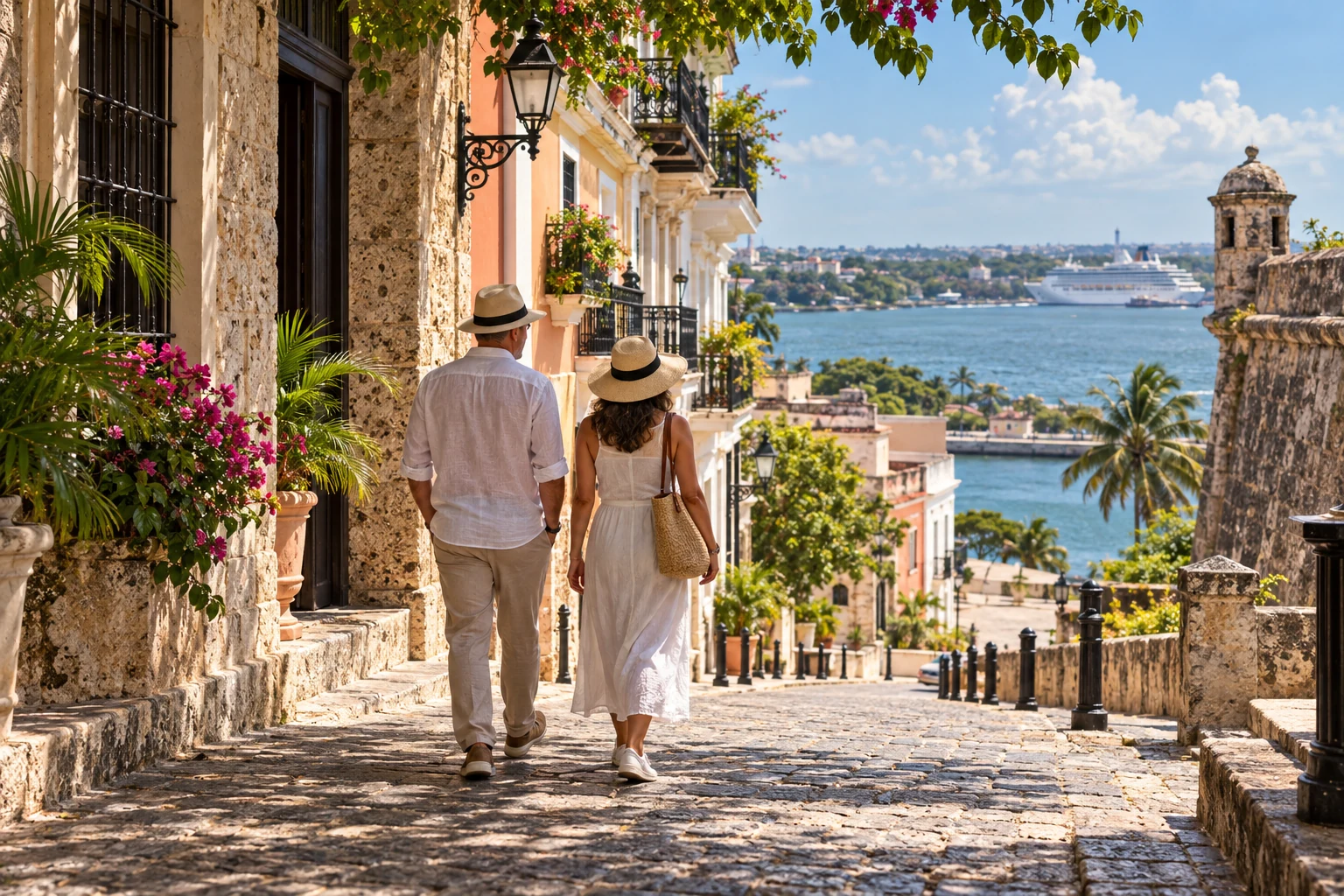
Start at Parque Colón under the statue of Columbus, then step into the Catedral Primada. Walk Calle Las Damas past the Panteón Nacional to the Fortaleza Ozama and its Torre del Homenaje. Continue to Plaza de España and the Alcázar de Colón, the viceregal palace of Diego Columbus and María de Toledo. Finish at the Monasterio de San Francisco ruins and the colourful houses of Calle Hostos. Museo de las Casas Reales and the Amber Museum are good indoor stops on hot afternoons. Compare Santo Domingo’s museums before choosing your stops.
Suggested half-day and full-day plans
Half day: Parque Colón, cathedral, Calle Las Damas, Fortaleza Ozama, Plaza de España and a coffee on Calle El Conde. Full day: add the Alcázar museum, lunch of sancocho or mofongo, the San Francisco ruins, a chocolate or cigar workshop and sunset drinks on a rooftop overlooking the Ozama. Plan your Santo Domingo cruise stop and return to ship.
Where to eat and drink
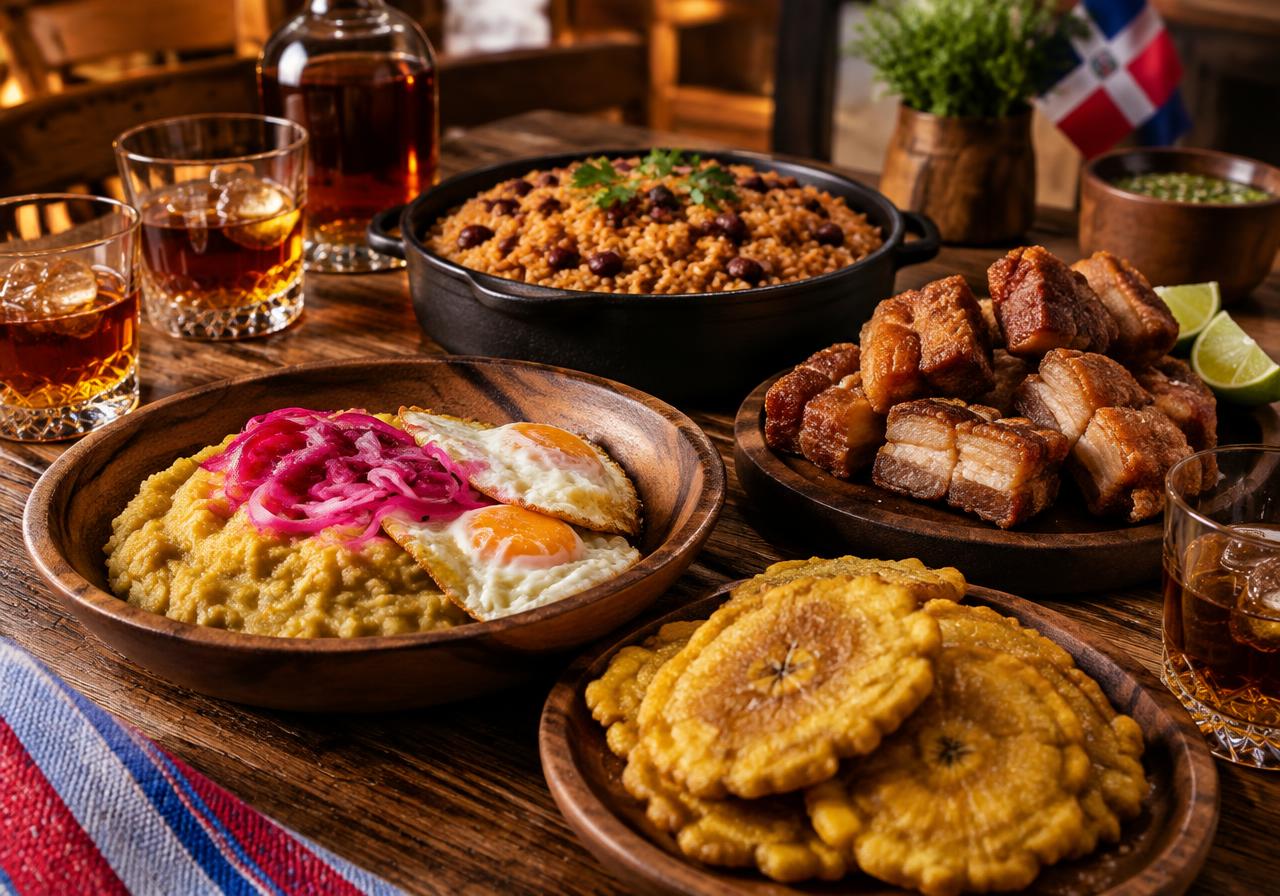
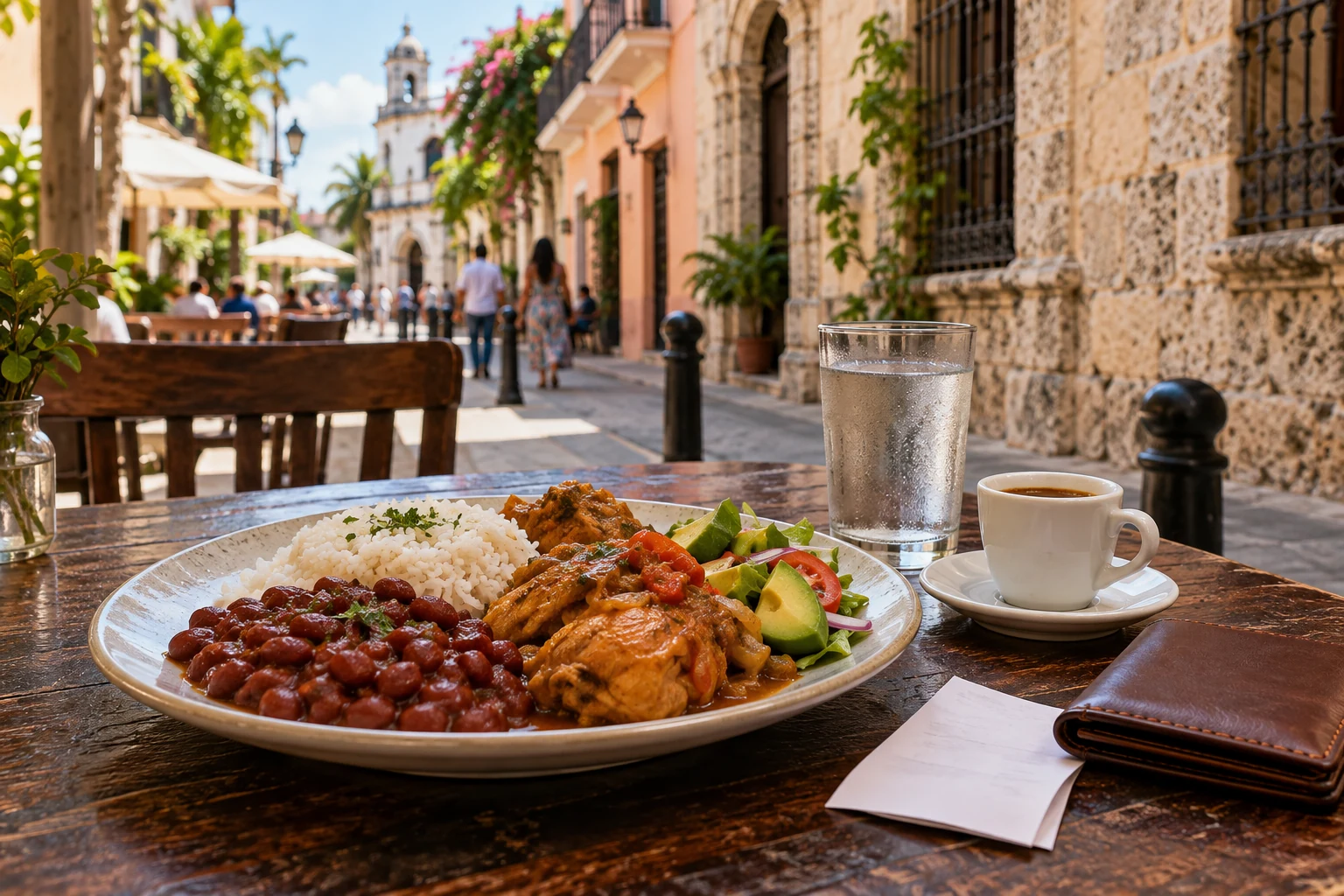
Calle El Conde and Plaza de España are lined with cafés and terraces. For Dominican home cooking look for comedores serving la bandera — rice, beans and stewed meat. Try a morir soñando (orange juice and milk), fresh coconut water from street vendors and a glass of aged Dominican rum after dark. Plan a Colonial Zone evening beyond daytime sightseeing. Understand what to order in Santo Domingo.
Practical tips
Wear flat shoes: the stone streets are uneven. Dress modestly to enter churches (shoulders and knees covered). Carry small peso bills for entry fees, which are modest (approx. a few US dollars per museum). Tourist police (CESTUR) patrol the district. If you are arriving by plane, book a private airport transfer from SDQ straight to your Colonial Zone hotel — most streets are narrow and some are pedestrian-only. If you have not booked accommodation, compare the Colonial Zone with other areas to stay before choosing your base. Before heading out, plan your journeys around Santo Domingo, including the return to your accommodation. Plan sightseeing routes and transport around your mobility requirements.