History, culture and collections
Museums in Santo Domingo: What to Visit and How to Plan Your Day
Choose between colonial history, Dominican culture, natural history and art. Compare Santo Domingo’s museum areas, plan a manageable route and know what to confirm before visiting.
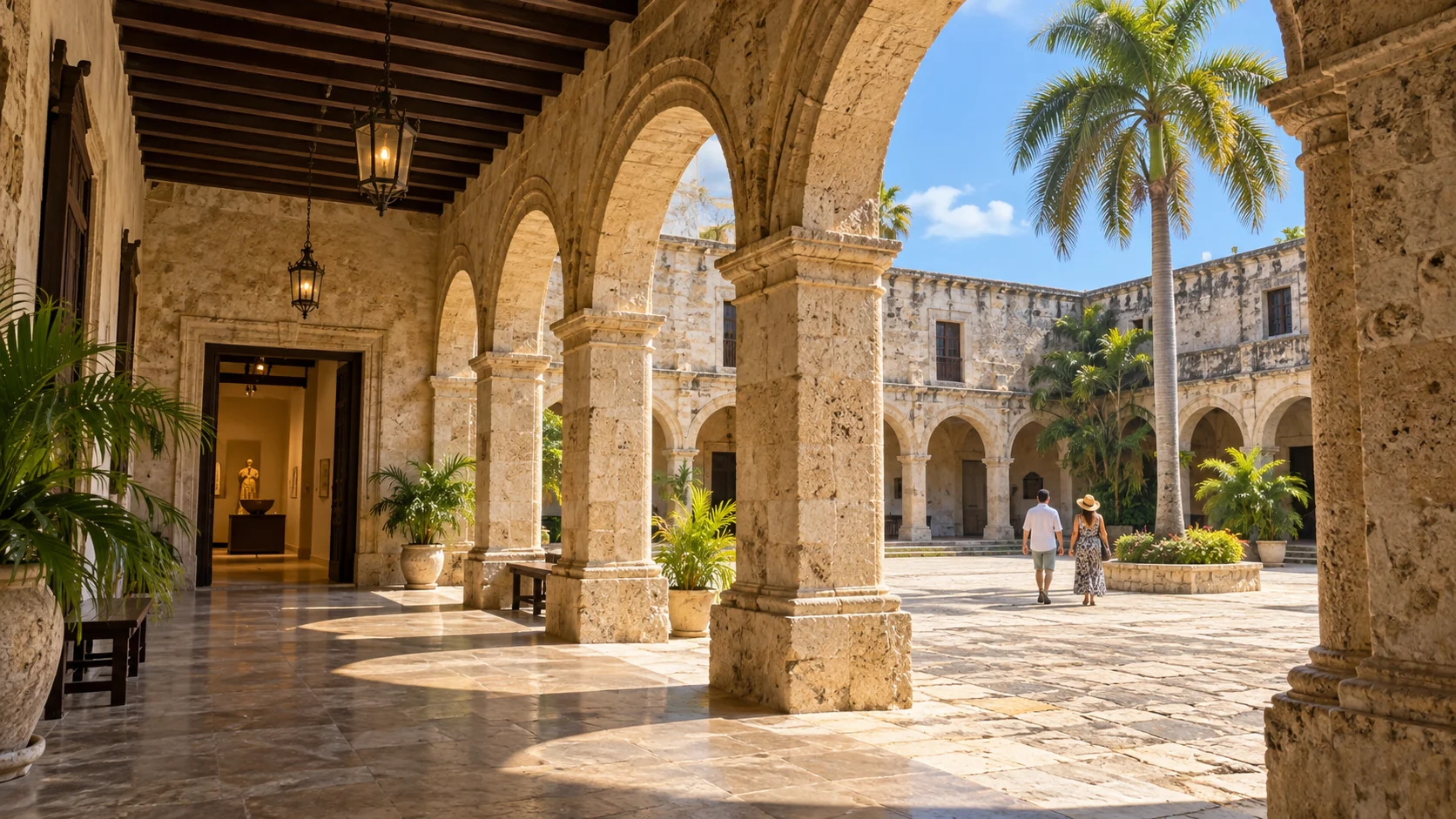
Choose a subject before choosing a route
For colonial history, compare Museo de las Casas Reales and Alcázar de Colón. For archaeology and Dominican cultural traditions, consider Museo del Hombre Dominicano. For wildlife, biodiversity and the history of life, look at Museo Nacional de Historia Natural. For painting and other artistic practices, check the programme at Museo de Arte Moderno. These are different visits, not interchangeable stops on a checklist.
Choose one priority and one optional addition. A person interested in natural history may get more from one focused visit than from several historic interiors. If you have only a morning, start with the subject you most want to understand and leave time to explore it.
Historic museums in the Colonial Zone
Museo de las Casas Reales occupies buildings associated with Spanish colonial administration. Its historical focus helps connect the streets of the old town with the institutions that governed the island. Alcázar de Colón, by Plaza de España, is the former viceregal residence associated with Diego Colón and María de Toledo; its palace setting gives a different perspective on the colonial period. Read the Colonial Zone guide to place both within the district.
The Alcázar’s reconstruction was inaugurated in September 2026. Older opening information can therefore be misleading. Confirm public access, available rooms and admission arrangements for your date at both museums. A view of the palace facade or a stop outside Casas Reales is not the same experience as entering their exhibitions. Churches, plazas and the fortress also have different purposes and visiting arrangements.
Plaza de la Cultura: look beyond the colonial period
Plaza de la Cultura is a separate cultural area, not another block of the Colonial Zone. Museo del Hombre Dominicano focuses on archaeology and ethnography, including the island’s Indigenous heritage and the diversity of Dominican culture. Museo Nacional de Historia Natural “Prof. Eugenio de Jesús Marcano” explores natural history; it is a different choice from a museum about human history.
Museo de Arte Moderno offers another way into Dominican culture through modern and contemporary art. Check which collections, temporary exhibitions and floors are available rather than expecting a particular work to be on display. Choose the museum by subject, then see whether another nearby visit still appeals after a break. Sharing the same cultural complex does not establish a shared ticket or identical opening hours.
Treat Faro a Colón as a separate outing
Faro a Colón combines a monumental building, a mausoleum and exhibition spaces in Santo Domingo Este, across the Ozama from the Colonial Zone. It makes sense for visitors interested in commemoration, architecture and the history surrounding Columbus. It is not part of the Plaza de la Cultura museum cluster.
Use the Faro a Colón guide for the building’s background and the competing claims about Columbus’s remains. Choose it deliberately rather than adding a river crossing simply to complete a list. Confirm which exhibition areas can be entered and arrange the return as well as the outward journey.
Build a half-day around one area
For a compact historic morning, combine one confirmed museum interior with a Colonial Zone walk and a meal or coffee break. Choose Casas Reales or the Alcázar according to your interests and access, rather than promising yourself every interior. The one-day itinerary shows where a selected visit can replace another stop. Keep time for reading displays, queues and the walk to the entrance.
For a Plaza de la Cultura visit, travel directly to your chosen museum, explore it and take a break before deciding on a second. If you want both areas, give them separate parts of the day or separate days. Use the transport guide to plan the actual journeys from your accommodation; a map distance does not account for traffic, waiting or the energy used in each museum.
Check opening days, admission and access
Before setting out, confirm the museum’s opening day, last entry, current admission categories, payment methods and any booking requirement. Ask whether the rooms or exhibition that interest you are accessible that day. Do not assume all museums close on the same weekday or that a general opening schedule overrides holiday changes, maintenance or a special event.
Check the language of labels, audio or guided interpretation. Ask about photography, bags, toilets, seating, stairs and step-free access where relevant. A historic building or a place described as family-friendly does not establish that it meets your access needs. Keep the date and terms of any reservation, and check what a ticket includes before comparing prices.
Adapt the visit for children and wet weather
For children, choose a subject they already find interesting and keep the first visit short enough to stay enjoyable. Natural history, art and an old palace offer different kinds of attention and conversation; none automatically suits every age. Use the family travel guide to fit meals, rest and transport around the visit. Check stroller arrangements and any age-specific activity in advance.
An indoor exhibition can offer a break from sun or a passing shower, but getting there may still involve exposed paths, courtyards and steps. Choose a confirmed open museum near your route rather than crossing the city just because it has started raining. During severe weather, follow local instructions and confirmed operating advice; do not treat an indoor destination as a reason to ignore travel disruption. Plan a flexible Santo Domingo day when it rains.
Decide what you want a guide to add
Independent visits let you spend time with the collections that interest you. A guide can help explain historical context, connect buildings with events and adapt the conversation to your group. Compare the Colonial Zone Walking Tour if you want the surrounding streets explained, then confirm which interiors, tickets and interpretation are included or optional.
The Colonial and Modern City Tour connects several parts of the capital, but a drive past Plaza de la Cultura or a named landmark is not a detailed museum visit. Before booking, agree the museum, time inside, language, admission costs and any substitutions. If collections are your main interest, say so when discussing the route instead of assuming they fit into a general sightseeing programme. Plan sightseeing routes and transport around your mobility requirements.
Questions about this itinerary
Which museum should I choose for a first visit?
Choose by interest: colonial history in the old town, archaeology and culture at Museo del Hombre Dominicano, natural history at the national natural history museum, or art at Museo de Arte Moderno. Confirm current access before deciding.
Are Santo Domingo’s museums open on Mondays?
There is no single timetable for every museum. Confirm the opening day and last entry of each museum you intend to visit, including holiday and temporary changes.
Can I combine a museum with a Colonial Zone walking tour?
Yes, if the timing and access work, but confirm the particular interior and admission arrangements. A landmark on the route does not mean its museum ticket or an extended interior visit is included.
Are all the museums within walking distance of the Colonial Zone?
No. Plaza de la Cultura is a separate area, and Faro a Colón is across the river in Santo Domingo Este. Plan transport and avoid treating all three as one walking circuit.
Do I need to book museum tickets in advance?
Requirements vary by museum, exhibition and type of visit. Confirm admission and any reservation requirement directly before planning around a particular time; also ask about guided visits and groups.
Keep planning
Experiences for this itinerary
Plan a cultural visit that fits your interests
Compare Santo Domingo experiences and confirm the museums, interior visits and interpretation you want before booking.
Explore Santo Domingo experiences