Bring home something you understand
What to Buy in Santo Domingo: Coffee, Cacao, Rum and Local Crafts
Choose useful souvenirs in Santo Domingo: compare coffee, cacao, rum and handmade objects, ask better questions and plan a compact shopping stop.
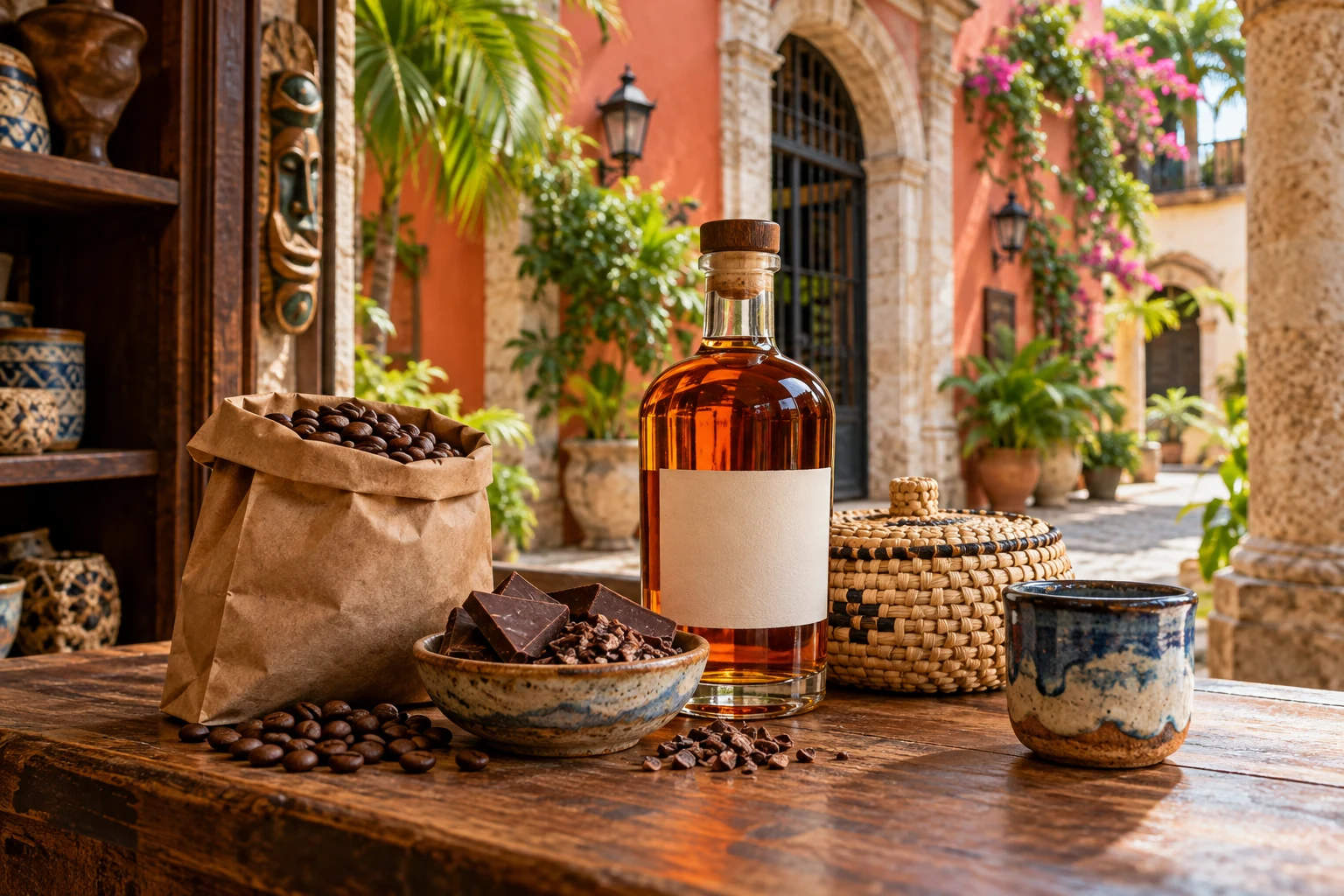
Choose the gift before choosing the shop
Decide whether you want something to eat or drink, a useful object or a decorative keepsake. Consider the recipient, ingredients they avoid, available luggage space and a spending limit. A small well-chosen item can be more useful than a large collection of unfamiliar products. Buying in Santo Domingo does not establish that an object was made there. Ask who produced it and where; distinguish Dominican manufacture from a Dominican-themed design or imported stock. Walk away if the explanation or price is unclear.
Coffee: check the form as well as the origin
Ask whether coffee is whole bean or ground, how it is packed and whether its grind suits the recipient’s brewing method. Check the producer information, declared origin, net weight and any roast or best-before information provided. Compare like-for-like packages instead of judging value by bag size. A sealed bag is easier to assess and carry than loose product with no information. The food and rum experience introduces coffee alongside other tastes, but confirm the actual programme; a tasting is not an obligation to buy.
Cacao: a drink, nibs and chocolate are different gifts
Choose the product you actually want to use. Cacao nibs, a preparation for a hot drink and a finished chocolate bar are not interchangeable. Read ingredients, cacao content where stated, added sugar, milk and other additions; do not assume that a dark colour means dairy-free or unsweetened. Check the seal, storage instructions and date, and consider heat during your remaining day. The Dominican food guide gives the culinary context. Do not buy an ingredient-sensitive gift on a verbal description alone.
Rum and cigars: avoid promises you cannot verify
For adult recipients, compare clearly identified, sealed products from a seller able to explain the producer, packaging and receipt. Do not infer authenticity from a low price, a nationality claim or a label that looks familiar. Ask about cigar storage and provenance rather than accepting a street sales story. The cacao and cigar experience offers explanation and a demonstration, with smoking optional and purchases separate. Confirm age suitability and the setting. Neither the activity nor this guide certifies a shop or product; check transport and destination requirements before buying alcohol or tobacco.
Crafts and jewellery: ask about materials and makers
For ceramics, textiles, baskets or jewellery, ask who made the item, where, and which materials were used. Inspect joins, edges, closures and fragile parts, and ask how to care for it. A locally purchased piece is not necessarily locally produced or handmade. If a stone or precious material is claimed, ask for a written description and meaningful supporting information. Colour and a seller’s assurance do not establish identity or value. This guide does not authenticate stones; choose another item if the evidence is insufficient for your purchase.
Give shopping a defined place in your city day
Use the Colonial Zone guide to place one compact shopping stop near sights or a meal you already planned. Confirm actual opening and leave time for comparing items without turning the entire walk into errands. The guided Colonial Zone walk can provide historical context; do not assume its route includes shopping, a particular shop or extra waiting time. Arrange any change in advance. A visit to a workshop can be worthwhile even if you buy nothing, and declining a purchase is a valid outcome.
Set a separate budget and confirm the final bill
Use the trip-budget guide to keep purchases separate from admissions, meals and tour charges. Compare the same weight, quantity, material and condition. Ask which currency is quoted, what the final total includes and which payment methods are accepted. Check any card conversion or charge presented before approving it. Request a receipt showing the seller, items and amount, and clarify any returns terms before paying. We do not invent typical souvenir prices or promise that bargaining is expected everywhere.
Plan the journey home before paying
The Santo Domingo packing list helps you separate day-bag needs from your main luggage. Before buying, consider weight, fragile packaging, heat and leakage. Ask for protective wrapping, but do not treat it as a guarantee against damage. Check the current rules for your airline, connections and destination, especially liquids, food, alcohol, tobacco, plant or animal materials. This article gives no universal allowance or permission to import. If you cannot confirm that an item can travel with you, choose a different souvenir rather than rely on a seller’s assurance.
Questions about this itinerary
Do I have to buy after a tasting or demonstration?
No purchase should be assumed from attending a cultural activity. Confirm the experience price and what it includes; the published cacao and cigar experience lists purchases separately.
Does buying in the Colonial Zone mean the product is Dominican?
No. Ask about the producer, manufacturing location and materials, and read the available labelling. The location of the shop is not proof of origin.
Which small gifts are easiest to choose?
Clearly labelled coffee or cacao and compact craft objects can be practical options, depending on the recipient, ingredients, heat and your journey. No category is automatically suitable for every traveller.
Can I take rum, cigars or food home?
Check the current carrier, connection and destination requirements before buying. The permitted amount and packing arrangements are not the same for every route; this guide does not confirm an allowance.
Keep planning
Experiences for this itinerary
Explore the products before choosing a souvenir
Tell us your date, interests and group. Confirm the tasting or demonstration, guide language, walking route and price. Ask separately about purchases; a cultural experience is not an authentication or shopping guarantee.
Compare cultural experiences